Value at Risk(VaR):
Value at Risk, or VaR, measures the potential loss associated with investing in a risky asset. It is calculated by considering the asset's historical volatility and the investor's risk tolerance level. While VaR is not an alternative to risk-adjusted value or probabilistic approaches, it borrows liberally from both.
What is VaR?
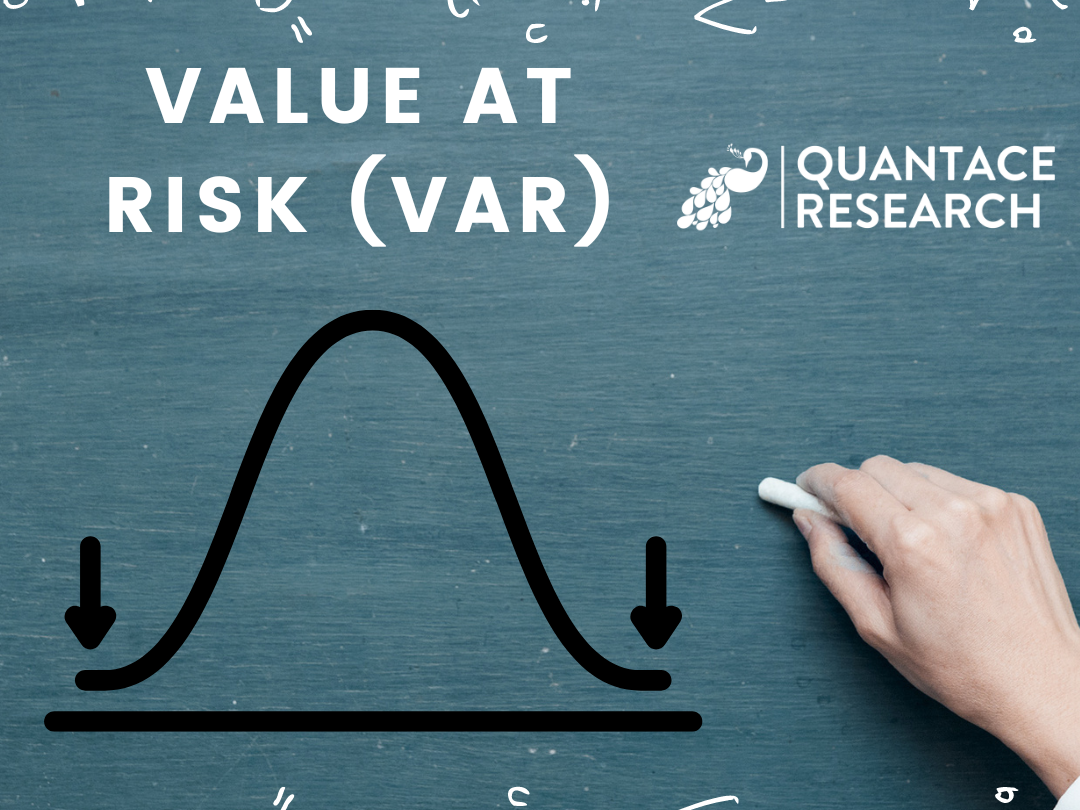
The Value at Risk (VaR) measures the potential loss in value of a risky asset or portfolio over a defined period for a given confidence interval. In other words, if the VaR on an asset is INR 10 million at a one-week, 95% confidence level, there is only a 5% chance that the asset's value will drop more than INR 10 million over any given week.
By understanding and monitoring the VaR, investors can make informed decisions about allocating their assets and how much risk they are willing to take on. Commercial and investment banks commonly use VaR to capture potential losses from adverse market movements.
-- When we take a closer look at Value at Risk, we can see that simulations can be used to help us understand and measure the risk of potential losses. To come up with an accurate estimate of the probability of loss, we need to consider several factors, including the probability distributions of individual risks and how these risks are correlated. Additionally, we need to consider how these risks might affect the value of our investment.
-- VaR is a measure of downside risk and potential losses. The collapse of Long Term Capital Management. An investment fund with a prestigious team of traders and Nobel laureates brought VaR into the mainstream and helped people realize its importance.
-- VaR has three key elements: the specified loss in value, the fixed time period over which risk is assessed, and the confidence interval. This can be applied to an individual asset, a portfolio, or an entire firm.
-- While VaR is typically used to assess market risks at investment banks - such as interest rate changes, equity market volatility, and economic growth - it can be defined more broadly or narrowly in specific contexts as needed.
Source: NYU Stern
Quantace Strategy offers clients leading, professional modern investment products that help them build long-term wealth and offers a way for investors to diversify their stock picking and understand how to pick stocks better. Our baskets are low-cost and is designed to provide the best return at the least risk possible. The baskets can be executed with a single click.
Disclaimer: This article is for information only and should not be considered as a recommendation to buy or sell any stocks.