Use Fast Fourier Transform to Predict Derivative Prices 🚄:
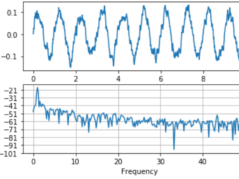
The Fast Fourier Transform (FFT) is an algorithm used to predict the future values of data. The algorithm computes the Discrete Fourier Transform of a sequence, its inverse, or both. Fourier analysis transforms a signal from the domain of the given data, usually time or space, and transforms it into a representation of frequency.
In the financial field, the FFT is used mostly in computational finance for predicting prices of financial derivatives over time. A financial derivative is an openly traded security backed by multiple assets or a single security, the most common being an option. To analyze a financial derivative, one would take the Discrete Fourier Transform of the security in question and then take the Inverse Fourier Transform to get future security prices.
An individual would then make trades based on this data. These strategies are used to predict and value financial derivatives by quant groups inside of Investment Banks, such as Morgan Stanley and Goldman Sachs, as well as quantitative hedge funds. While more robust strategies exist for predicting and valuing these financial derivatives, this strategy provides a foundation.
FFT performed on plain vanilla equity is not as common in quantitative finance. This is because there is not as much mathematical data that can be drawn to help predict future values. Also, professional companies will likely have more data in their models than just stock prices.
Source: UTAH
Quantace designs systems to pick stocks better. Our baskets are low-cost which is designed to provide the best return at the least risk possible. The baskets can be executed with a single click.
Supported Brokers are IIFL, 5paisa, Angel broking, Kotak securities
Invest Now – Quantace Research | Bluechip Freedom (smallcase.com)
Disclaimer: This article is for information only and should not be considered as recommendation to buy or sell any stocks.